 Weicong Jing
FAST Pulsar Database: II. Measurements of Scattered Profiles of 121 Pulsars
Citations: 26 (SciX · arXiv · 2026-11-05)
Radio astronomy
I use the Five-hundred-meter Aperture Spherical Telescope (FAST) to study pulsars. I’m interested in how their radio pulses are produced, and what happens to those pulses as they travel through gas in the Milky Way.
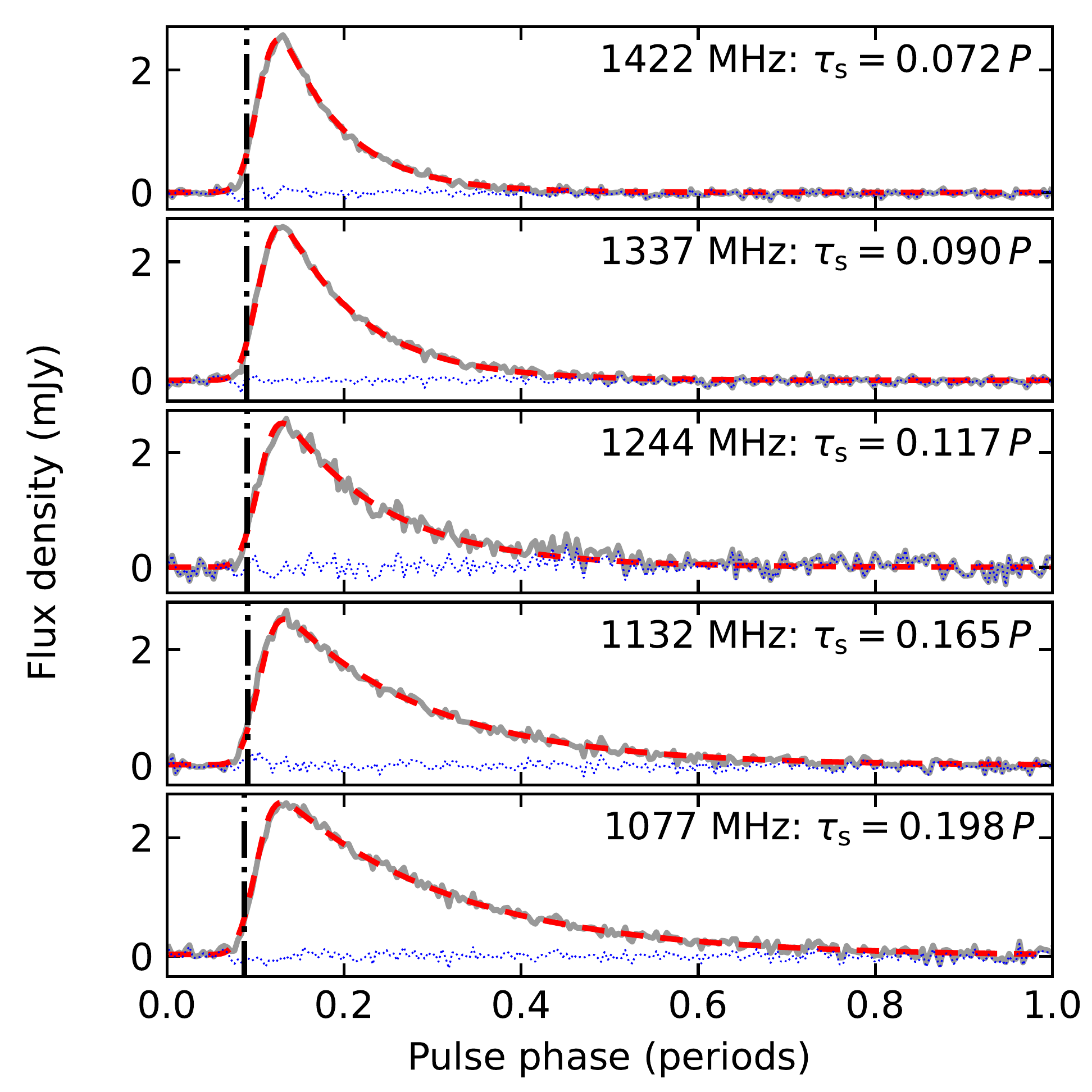
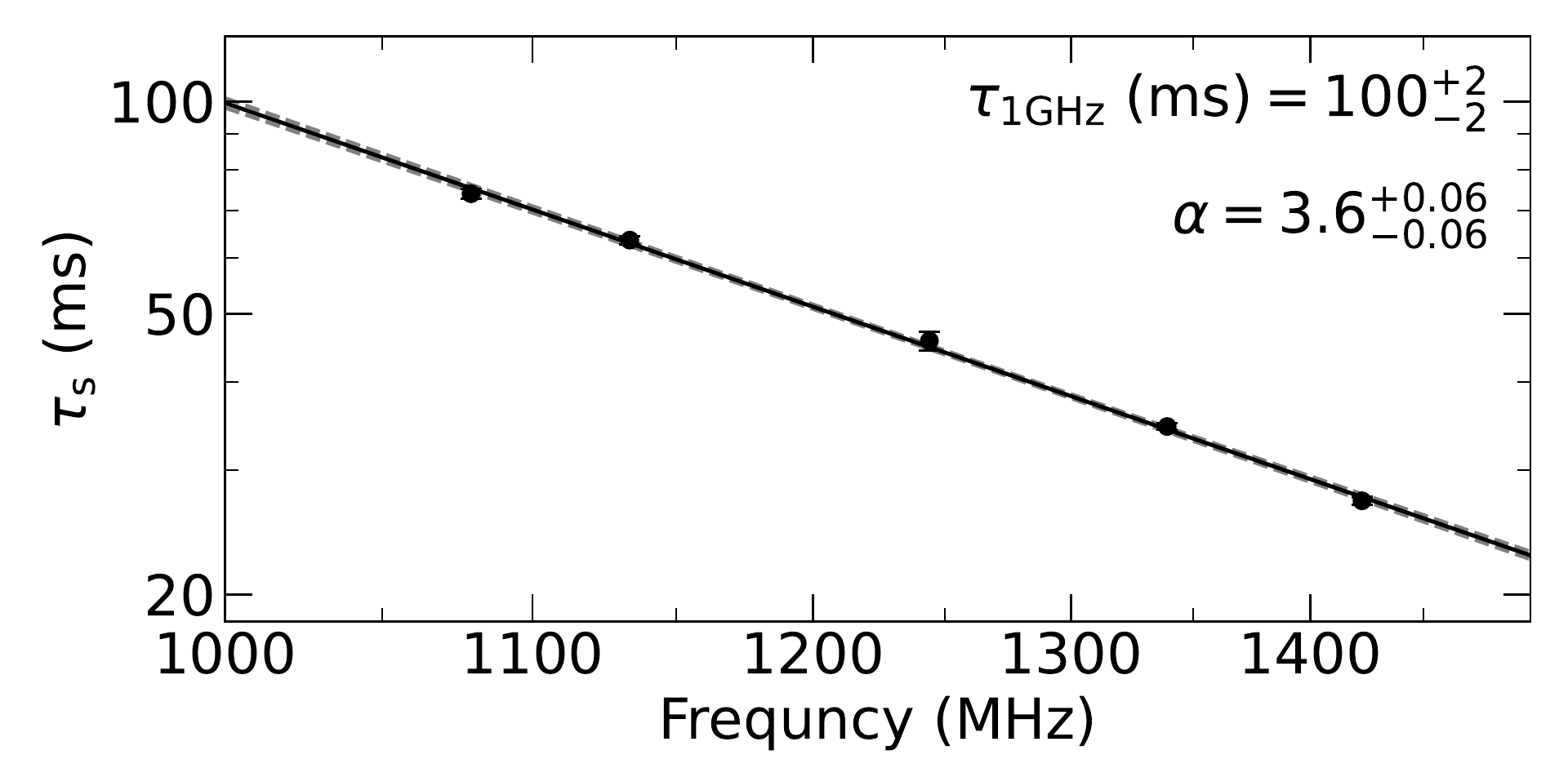
Radio waves take slightly different paths through ionised gas, spreading a short pulse into a tail. In our FAST observations, we found stronger scattering along some sightlines through Galactic spiral arms. PSR J2052+4421g illustrates how we measure a tail and trace its change with frequency.
Citations: 26 (SciX · arXiv · 2026-11-05)